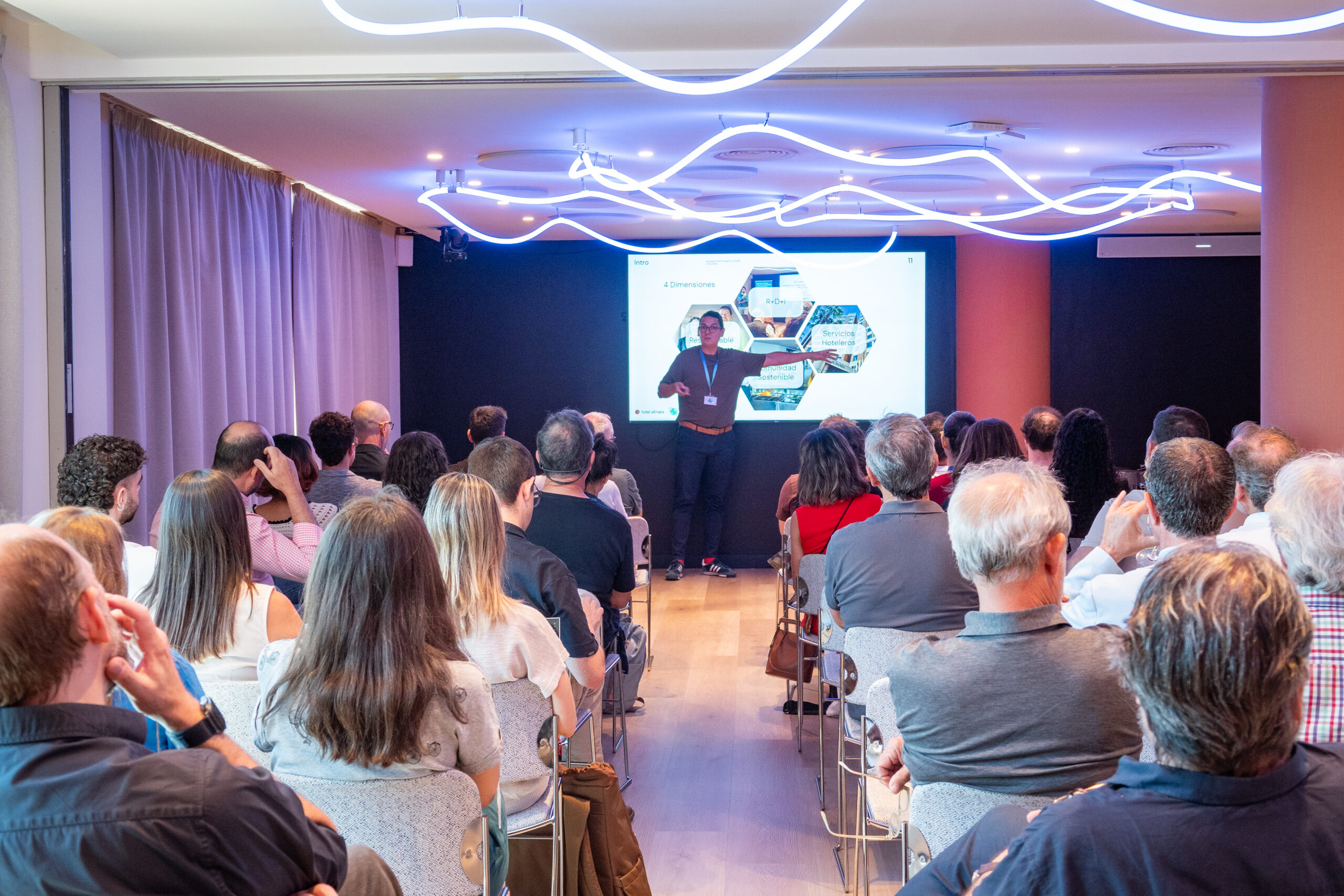
THE GIVAH PROJECT HOSTS ITS CLOSING CEREMONY AT THE LIVING LABS OF THE ALIMARA UNIVERSITY HOTEL
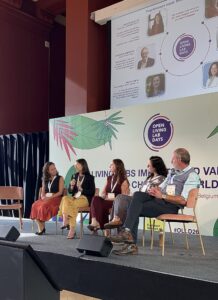
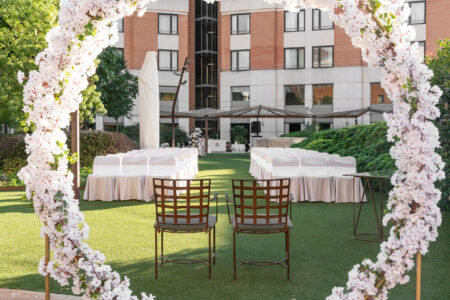
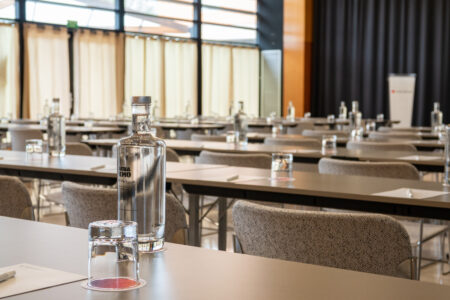
The Living Labs at the Alimara University Hotel served as the venue for the closing session of the GIVAHproject.
The digital transformation of the hospitality sector continues to make progress. The GIVAH project, involving the Alimara University Hotel and the CETT Barcelona School of Tourism, Hospitality, and Gastronomy, is wrapping up with the presentation of a technology demonstrator that will allow for the validation, in an immersive environment, of the solutions developed during the last few months of research.
This new milestone represents a significant step forward for the industry, which aims to explore how Generative Artificial Intelligence and immersive technologies can help transform the way spaces, products, and experiences in the hospitality industry are designed, promoting more agile, collaborative, and people-centered processes.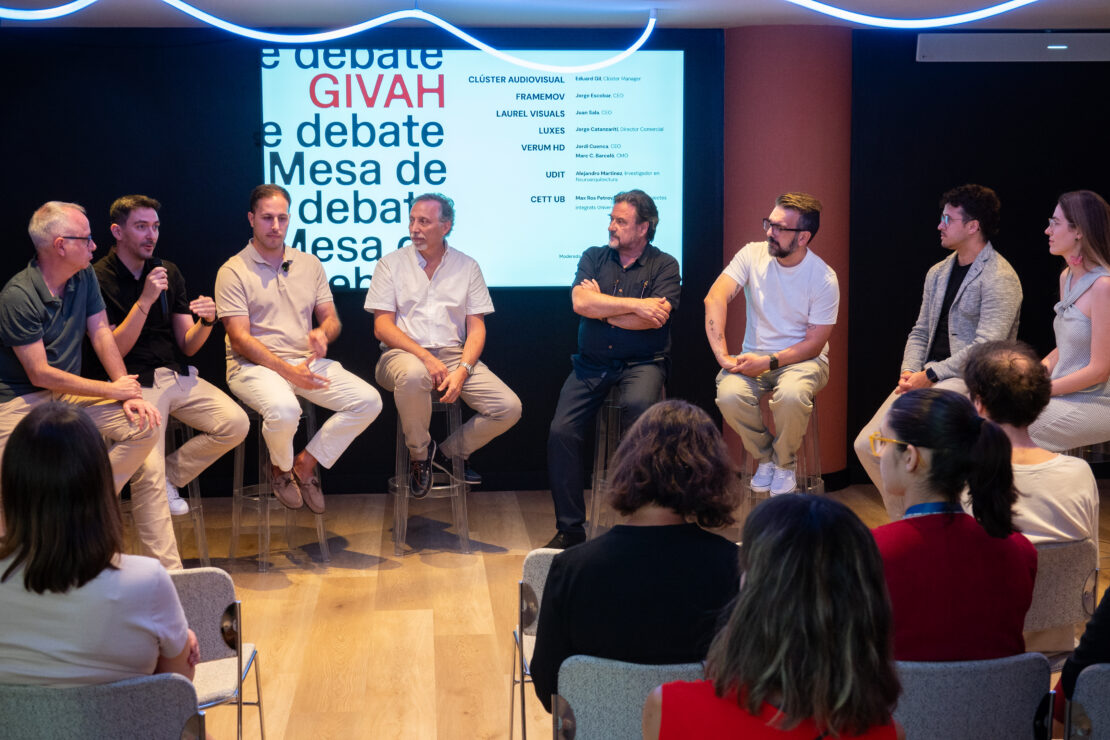
From Research to Validation in an Immersive Environment
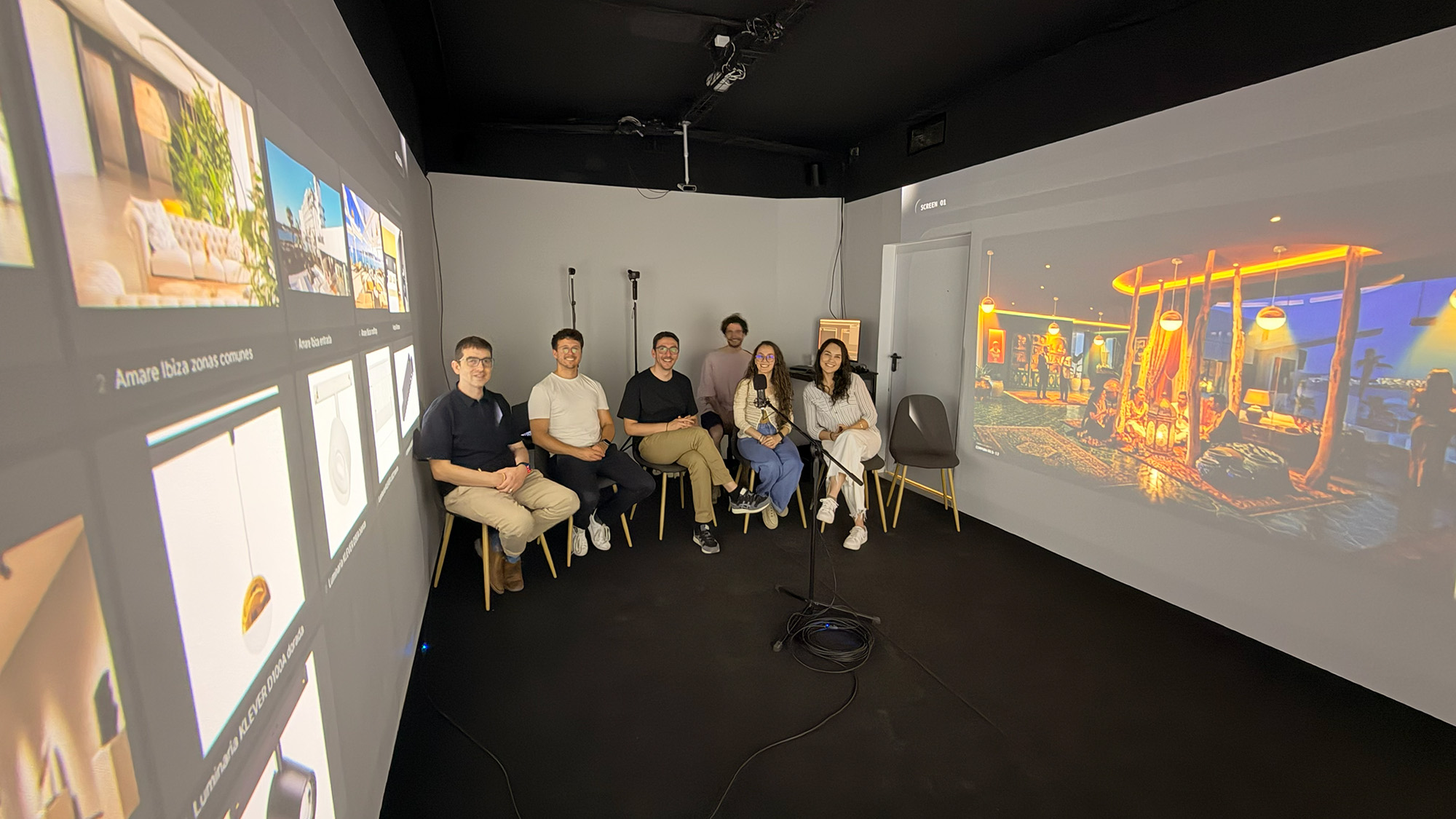
After an initial phase focused on developing generative AI models and new forms of interaction between people and technology, GIVAH validated its key achievements using a demonstrator installed in the immersive room at Framemov, a member company of the consortium.
This space allows usto recreate scenarios that closely resemble real-world work situations in order to analyze the system's behavior, verify its practical usefulness, and evaluate how it can be integrated into the hospitality industry's design and decision-making processes.
More than just a technological prototype, the demonstrator serves as an experimental environment where various professionals can collaborate, analyze proposals, and validate solutions before implementing them in physical spaces.
Artificial Intelligence to Create Industry-Specific Proposals
One of the project’s most notable developments is its ability to generate context-specific visual proposals for hospitality spaces, products, and experiences using generative artificial intelligence.
Unlike other general-purpose tools, GIVAH uses specialized information provided by the organizations participating in the project, which allows it to produce results that more closely reflect the sector’s actual needs.
In this process, Laurel Visuals develops new methods for controlling complex AI-generated scenes, while the other partners contribute specific expertise that enriches the system.
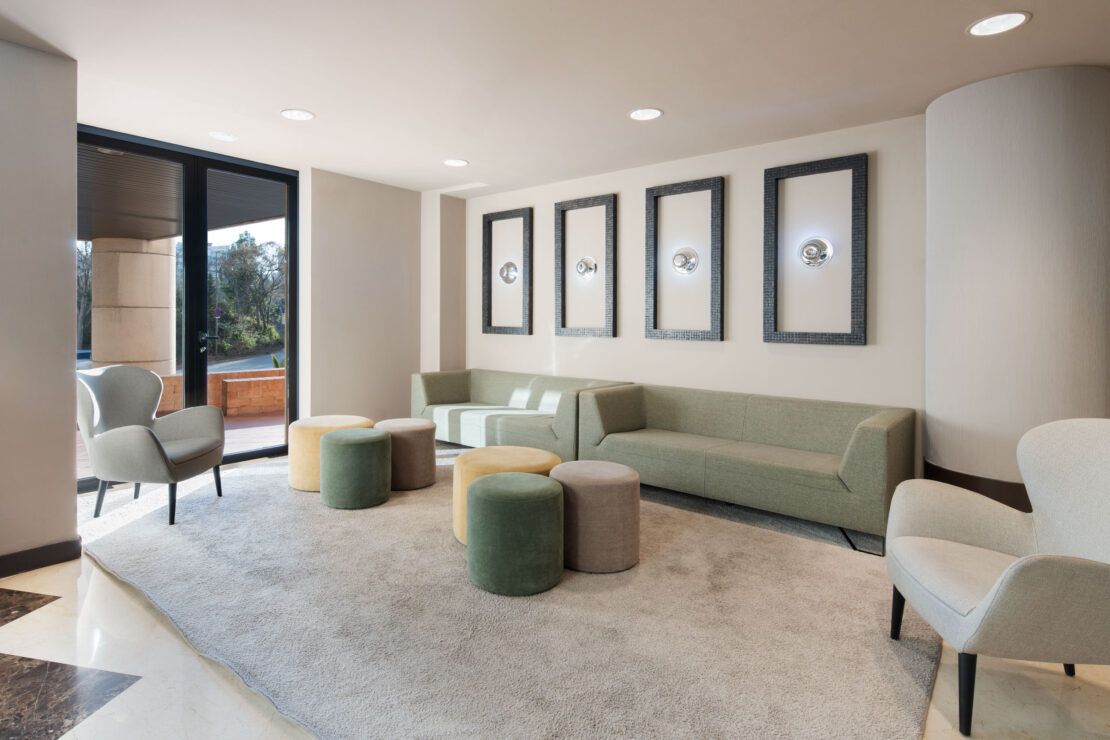
CETT contributes information related to hotel operations, space management, and culinary offerings, using real-world settings such as the Alimara University Hotel as a reference. For its part, LUXES provides expertise in lighting, equipment, and atmosphere creation, while VERUM HD offers professional insights on architecture, interior design, and hotel design.
By incorporating this industry-specific knowledge, AI-generated proposals can better address the specific needs of the hospitality sector and facilitate creative processes that are much more in line with professional reality.
A New Way to Collaborate on Space Design
Another major advancement of GIVAH is the ability to explore this content collaboratively within an immersive environment.
The system developed by Framemov is designed to facilitate co-creation sessions in which multiple people can interact simultaneously with proposals generated by artificial intelligence.
One of its key innovations is the incorporation of more natural interfaces—based on voice and gestures—that simplify interaction with the technology and allow professionals without technical expertise to actively participate in the creative process.
The goal is not merely to visualize images or scenarios, but to create a space where designers, manufacturers, hotel operators, and managers can share ideas, analyze alternatives, and make decisions collaboratively from the earliest stages of a project.
A project built on collaboration
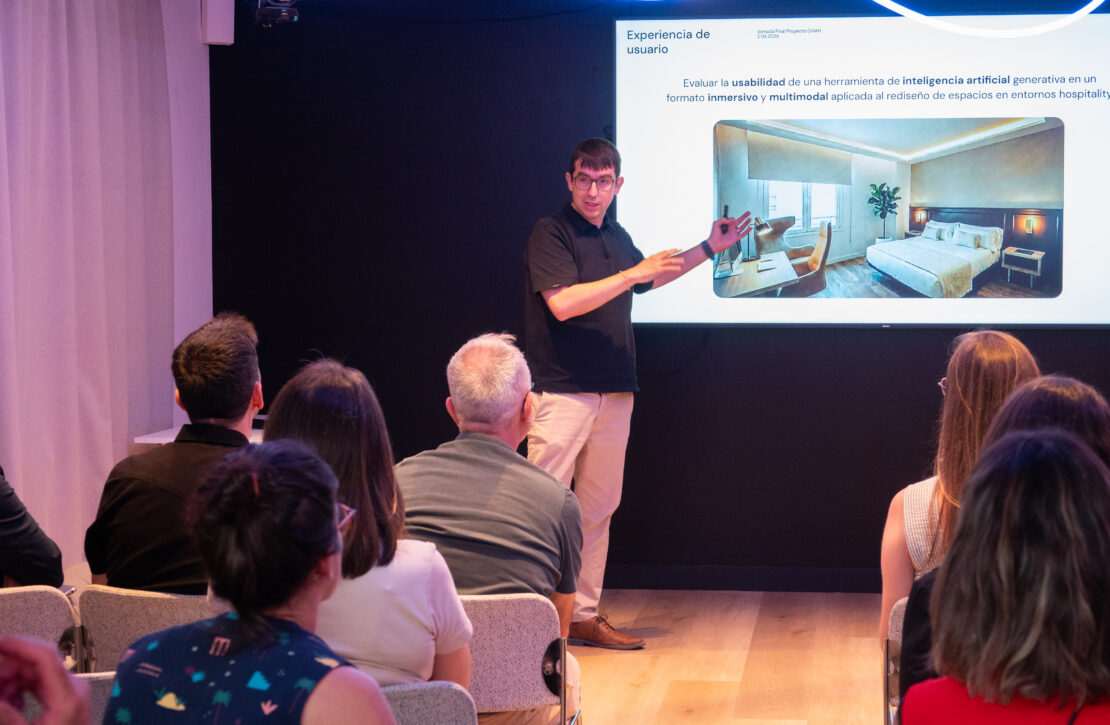
GIVAH's unique value also lies in the diversity of profiles that make up the consortium.
Coordinated by the AMBIT Living Spaces Cluster, the project has brought together companies, technology centers, universities, and specialized organizations that have contributed complementary expertise to develop solutions with direct market applications.
In addition to CETT and the Alimara University Hotel, participating organizations include Framemov, responsible for the immersive environment; Laurel Visuals, which specializes in applied generative AI; LUXES, a leader in lighting solutions; VERUM HD, which specializes in hospitality design; UDIT, which will help objectively evaluate the user experience through its applied neuroarchitecture laboratory, NEURO_COlab; and the Catalonia Audiovisual Cluster, which strengthens the connection with the ecosystem of immersive technologies and audiovisual production.
The combination of technological, academic, and business expertise makes GIVAH an applied innovation project with a strong focus on technology transfer to the industry.
Innovation to Accelerate the Transformation of the Hospitality Industry
Beyond technological development, GIVAH aims to demonstrate how Generative Artificial Intelligence can become a useful tool for improving the design and planning processes for hospitality spaces.
The ability to generate context-specific proposals, explore them immersively, and validate them collaboratively helps reduce uncertainty, facilitate decision-making, and optimize creative processes before any physical work begins.
This approach opens up new opportunities for manufacturers, design firms, architects, hotel operators, and companies seeking to incorporate digital methodologies capable of improving both efficiency and the end-user experience.
The Commitment of the Alimara Hotel and CETT to Innovation
The participation of the Alimara University Hotel and CETT in GIVAH reflects their commitment to promoting applied research projects that contribute to the evolution of the hospitality sector.
Turning real spaces into experimental environments makes it possible to validate new solutions under conditions that closely resemble actual operating conditions, helping innovation reach companies sooner and generate a tangible impact.
With the closing session, GIVAH is moving closer to its goal: to demonstrate that generative technologies can go far beyond image creation and become a strategic tool for designing, evaluating, and improving the hospitality experiences of the future.
Innovative Business Groups Program (AEI) of the Ministry of Industry, Trade, and Tourism: AEI-010500-2025-60.